

Bento box plating is where the Japanese tradition of Moritsuke, the art of food arrangement, meets the contemporary demands of hospitality dining. Furthermore, Moritsuke teaches that food presentation matters in every context: whether a chef plates for a formal restaurant, a room service order, or a catered event. Moreover, the MyGlassStudio bento dinner plate collection provides the canvas, a range of covered, stackable glass plates in bold colours designed specifically to support the craft of plating.
Bento Box Plating. Five Techniques for Hospitality
The bento dinner plate format creates a natural framework for elevated plating. Furthermore, its defined rectangular and square shapes encourage deliberate composition rather than open-plate improvisation. Moreover, the following five techniques suit bento box plating across restaurant, in-room dining, and event service formats.
1. Frame it in a Rectangle or Square
The bento plate’s geometry acts as a natural frame. Furthermore, composing food within the defined boundaries of the plate creates clean, intentional presentations. Moreover, negative space within the frame, leaving parts of the plate visible, adds visual breathing room and elevates the perceived quality of the dish.
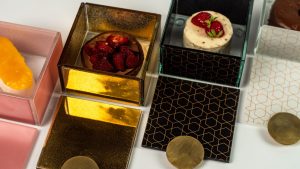
Bento box plating, small square bento dinner plates by MyGlassStudio.
2. Lead the Focus on One Ingredient
Strong plating directs the eye. Furthermore, placing the hero ingredient at the centre or along a natural sightline pulls attention before anything else registers. Moreover, in bento plating, the covered reveal amplifies this technique, explore our Covered Serveware collection, the hero ingredient appears only when the lid lifts.
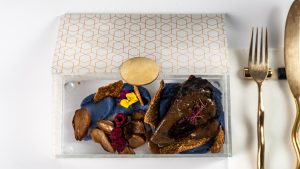
Bento plating, lead focus on one ingredient. Code: S5-S6-02-RHZ422021.
3. Moritsuke. Compartment Plating Presentation
The original Japanese plating philosophy divides food into compartments, each with its own character. Furthermore, bento style plating in the MyGlassStudio format uses the modular plate set, rectangular main, square sides, to create distinct zones for different courses or components. Moreover, this approach to compartment plating presentation guides the order of eating, gives each element its own identity, and creates a multi-sensory table arrangement.
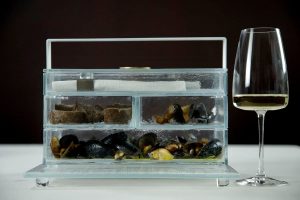
Bento style plating, compartment plating presentation in a luxury picnic basket. Code: SC-18-08-X40.
Plating Tools. Squeeze Bottles, Molds and Tweezers
4. Use Empty Space. Plate Outside the Box
Negative space is a plating tool, not wasted surface. Furthermore, leaving areas of the plate empty creates visual contrast and allows individual components to read clearly. Moreover, this technique suits the clean colour palette of the MyGlassStudio bento plates, where the plate’s own colour becomes part of the composition.
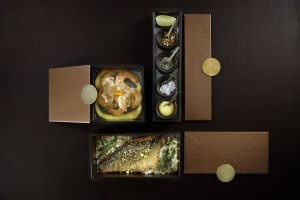
Bento box plating with negative space, modern bento box in brown. Code: DMZ026021.
5. Match Portion Size to Plate Format
Choosing the right plate for the right portion prevents overcrowding. Furthermore, the small square bento plates suit appetizers, desserts, and amuse-bouche; the large rectangular plate holds main courses. Moreover, using the correct format keeps presentation clean and avoids the common mistake of under-filling or overfilling a plate relative to its size.
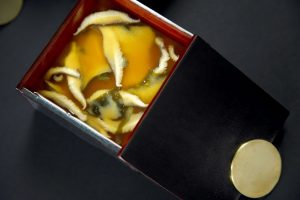
Bento box plating, soup bowl matched to portion. Code: S5-S6-03-SS3843.
Plating Tools and the Art of Bento Box Presentation
The right tools make bento box plating both easier and more precise. Furthermore, a squeeze bottle or piping bag applies sauces with accuracy, avoiding the pooling and smearing that can undermine a careful composition. Moreover, ring molds help build height on the flat bento plate surface, a useful technique for taller, more architectural plating styles.
Chopsticks or tweezers allow precise positioning of delicate garnishes. Furthermore, tongs, brushes, saucer spoons, and geometric molds each serve specific plating purposes. Moreover, the goal is always the same, to arouse the diner’s senses before a single bite, creating anticipation that makes the food taste better.
Read more about the Japanese style bento box food display, explore our bento dinner plate collection, or contact us at [email protected] for bespoke bento box plating solutions for your restaurant or hotel.